
Human-machine teaming makes NZ aviation education take-off
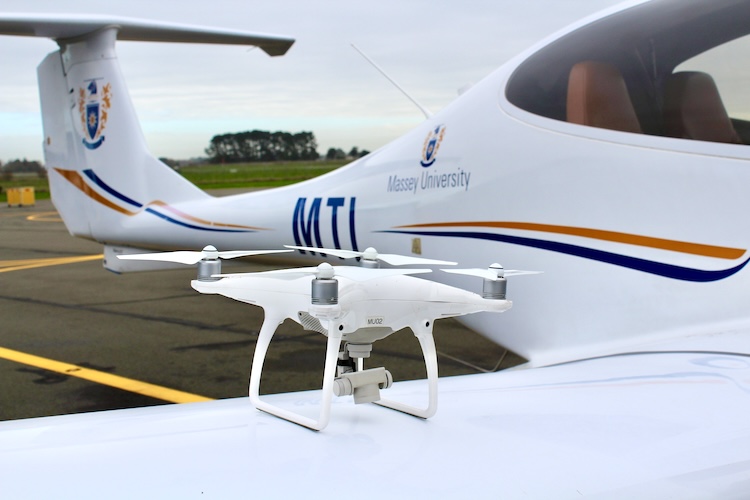
Technology consultancy Latent and Massey University team up to offer a timely new online short course exploring Manned-Unmanned Teaming (MUM-T).
Massey University School of Aviation and defence and high technology consultancy Latent have launched a new short course focused on Manned-Unmanned Teaming (MUM-T),
MUM-T involves human-crewed vehicles, such as aircraft, working collaboratively with uncrewed systems (drones or robotic ground vehicles) to execute missions. The technology allows a pilot or crew member to control, share data with, or oversee one or more uncrewed platforms from their cockpit
The new course will examine how people and autonomous systems work together in operational environments.
Developed over the past year by aviation, military and industry practitioners, the 40-hour course to be delivered over 14 sessions explores trust, human-machine interaction, communication, decision-making, interoperability, governance and operational integration.
“The technology is important, but so is understanding how it will be used. The same questions are emerging across aviation, infrastructure, emergency response, border security and public service sectors. How do people and autonomous systems learn to work together effectively?“
The launch comes at a time when governments and industry are investing heavily in autonomous systems, artificial intelligence and uncrewed capabilities. Recent defence investments in autonomous technologies reflect a broader international trend as organisations seek to harness the speed, scale and persistence these systems can provide.
“Most of the current noise is focused on the platform. The bigger question is the team. How do humans and machines build trust, share information and make decisions together? That’s where many of the operational and organisational issues now sit,” said Josh Wineera, MUM-T course co-creator and Director of Latent who is also a former New Zealand Army Lieutenant Colonel.
While examples are drawn from aviation, the programme explores human-autonomous systems teaming challenges that are emerging across multiple sectors.
“The technology is important, but so is understanding how it will be used. The same questions are emerging across aviation, infrastructure, emergency response, border security and public service sectors. How do people and autonomous systems learn to work together effectively?” said Derek Tunui, MUM-T Programme Lead and former New Zealand Army Major.
According to the course overview, it will also include insights from industry and legal specialists, alongside academic and operational perspectives, ensuring a balanced and practical understanding of MUM-T across sectors.
Course developers stressed that the programme is not designed as a drone pilot qualification. Rather, it focuses on the human, operational and organisational foundations that underpin effective human-autonomous systems teaming.
While the initial programme is delivered online, the longer-term ambition is to move beyond theory and into practical application. The team hopes future aviation students will ultimately have opportunities to experience human-autonomous systems teaming in simulated and operational learning environments.
“Our ambition is that future aviation students will not only learn about these concepts, but ultimately have opportunities to apply them in realistic training and operational environments,” said Wineera. Further information about the course is available from the Massey University School of Aviation.

