
The future is not so bright
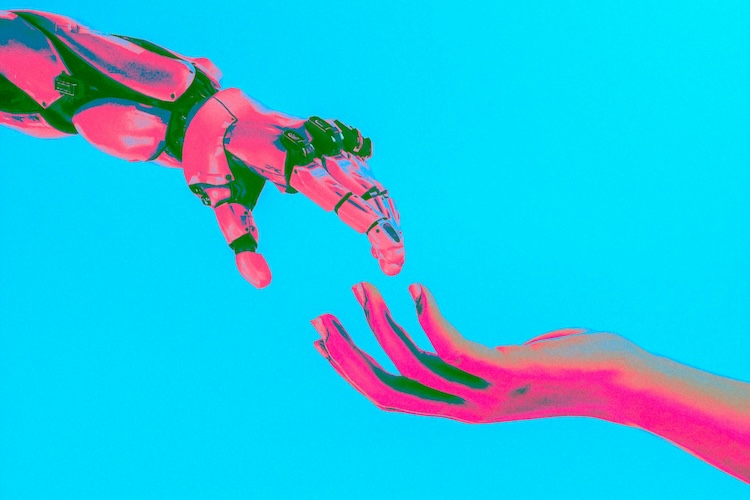
Traditional approaches to security won’t serve us well in a future where threats ignore past rules, writes Dr John Battersby.
The 10th anniversary of Line of Defence is a milestone worthy of note for any publication. But for a New Zealand one, which pontoons between the various security niches across the country, accesses the security bureaucracy, engages politicians with an interest in defence and security – and invites academics also into the dialogue – Line of Defence has performed something really quite special.
It is fitting then, to mark this occasion, that I offer a challenge to the entire security sector. This goes out to all of you, in every nook and every corner, in every pursuit and every undertaking, in every office, military, naval, law enforcement and intelligence organisation –to everyone state and private – who purports to contribute to the safety and security of New Zealanders.
The time has come to rethink our siloed approach to security, reassess the assumed separateness of the domestic and international dimensions of defending our national interests and understand that we need to evolve our approach in line with the technical and geopolitical tectonic shifts that are occurring right now. The matter is urgent.
For too long we have trusted that God would defend New Zealand by geographically separating us from the troublesome portions of the globe where things are not so peaceful. We have accepted the neo-liberal capitalist business oracles that preach market forces, economies of scale, and ‘just in time’ supply lines.
“While evolutionary technology has always extinguished old pursuits, it has generally offered new ones – AI looks set to buck this trend, potentially removing a swathe of human roles, more rapidly than at any time previously and leaving humans, in many cases, simply redundant.“
Yet, it is often observed that New Zealand produces enough food to feed 40 million people, but among a mere five million of us, thousands are going hungry. We produce timber in the millions of cubic meters, but we have people without houses. Our mills are closing, we export most of the timber we produce; we are an oil-producing country, but we have closed our only refinery, and we export all we produce.
At the heart of New Zealand is New Zealanders – and we need to put them back at the centre of our country’s economic-security-law enforcement solar system.
Our clean green image is little more than a weak public relations wash, because every single commodity we buy or sell is conveyed by fossil-fuel-powered vehicles from field or factory to the shop floor, and from there to our homes. Going electric is hardly a full alternative option in a constantly changing climate, when a huge proportion of our electricity is dependent on regularity of rain and wind, without harmful deluges or storms all too commonly occurring now.
Energy diversity is what we should have been aiming for decades ago, rather than pretending we can, by token actions, make any real difference to global temperatures. It is late now, but not too late for us to focus on building a minimum self-sufficiency in critical strategic commodities and services to manage through the geopolitical storms that are becoming increasingly common in our time.
The post WWII geopolitical tectonic plates have ruptured in the 21st Century. Our oldest friend, the United Kingdom and the Commonwealth, the glue that took us through two world wars is but a memory now.
Our more recent friend, the United States, has lost its rational mind – its commander in chief now pursues an erratic, directionless and goal deficient foreign policy which has lurched dangerously in less than two years across western and eastern hemispheres. He has imposed tariffs on friend and competitor alike on no reasoned basis and for no tangible benefit to anyone. We simply cannot predict what the US, with Donald Trump at the helm, will do next. We need to start thinking seriously about the implications for New Zealand and the South Pacific of this new impulsiveness in US policy.
The People’s Republic of China is an emerging global superpower, likely with little military interest in South Pacific for now. But faced with an irrational and now distracted American hegemon, what will it do next? Will its activities in the South China Sea disrupt sea and air routes in that region? Will China take Taiwan? If China does – it has to be quick, because an elongated conflict in and around Taiwan will seriously disrupt communications and trade routes New Zealand relies on.
No one knows what a US response will be in a China-Taiwan conflict if it occurs in the next two and a half years. If the US-Iran conflict has proved disruptive, contemplate the effects of a Chinese plan not going well, extending an expected short operation into months of conflict, drawing in regional neighbours and resulting ultimately in a Sino-US conflict raging in the Pacific. This is all conjecture… for now.
Into this regional uncertainly add the criminal use of online technology, the transnational effects of Australia’s deportation of criminals to their homelands of origin and the development of illicit submarine drug carriers from Asia and the Americas into the Pacific Islands – and from there to here! This is in addition to the already occurring infiltration of airline, shipping and port companies, exploiting privileged access to cargoes and baggage handling systems.
Methamphetamine, MDMA and cocaine are consistently detected in New Zealand’s wastewater showing that while police and customs are regularly reporting increasing interceptions of contraband, such seizures are likely still within the acceptable-loss limits of criminal enterprises. No one really knows how many firearms enter the country the same way. Gang patches are no longer visible – but gang based criminal activity has not subsided.
Our Pacific Island neighbours lack the policing resources, and in some cases the integrity of their law enforcement institutions, to effectively detect and intercept illicit commodities at their borders.
The challenge for New Zealand is to better integrate its various law enforcement agencies to reduce siloing and eliminate the ongoing wastage of money based on tradition and ‘doing things the way they have always been done.’ We need to project our activity across New Zealand as well as into the South Pacific. We need to better integrate private endeavour into our law enforcement capability to force multiply our effectiveness and we need to aim to actually deter, reduce and prevent illicit activity which is costing our country and harming our people like never before. We need to follow the Insurance Council’s advice and move toward being a country that can build resilience to bad weather, instead of being happy simply to clean up after it.
New Zealand has now passed legislation criminalising foreign interference. This legislation portents risks to our democracy at multiple levels, using cultural, educational, government and business vectors to exploit our national security naiveté, our inability to think strategically long-term at almost every level, and our contentment with ‘she’ll be right’ approaches to problems that seem too hard to solve.
But exposing the risk is quite different to mitigating it, and this legislation will not curtail a problem with a vast, grey, no-mans-land between innocent influence and sinister interference potentially overlapping whenever we deal with people from another country.
Conducting business has always been a political activity, especially in a country where trade is our foreign policy. Geopolitical changes globally and regionally bring with them risks in everything we do and now demand that security consciousness and prudence be added to what, too often in the past, has been a tendency to simply follow the dollars. Private enterprise in particular needs to be alert to this risk.
This requirement for prudence is no more evident than in the unbridled promotion across business and government of Artificial Intelligence to enhance capability, reduce costs, improve production and drive efficiency.
AI is the 21st Century’s iteration of the Industrial Revolution, and it heralds a phenomenally different new world. But AI is not intelligent – it does not think… not yet anyhow. It detects what it is directed to look for across vast data sets, and it is fast, doing multiple tasks much quicker than humans can. It has been around for decades, developed in fits and starts, but now likely to progress far more consistently and widely across all manner of applications. There are positive results in medicine and many other research pursuits as a result.
But just like the industrial revolution, splitting the atom, the internet of things and social media – AI’s inventors and promoters take no care or responsibility for the more sinister implications of their invention.
While evolutionary technology has always extinguished old pursuits, it has generally offered new ones – AI looks set to buck this trend, potentially removing a swathe of human roles, more rapidly than at any time previously and leaving humans, in many cases, simply redundant. Under threat are not just low skilled jobs, but also creative vocations that humans train for years to do, in law, design, marketing, policy, journalism, and one might even suggest education… but then, why would humans need educating anymore?
Already, globally graduate employment rates are dropping, and many workforce entry level positions are vanishing. We may already be on a course toward an economically disenfranchised generation with shattered aspirations, and this is an ill omen for the future.
Perhaps this is all too cynical. But hope is not a plan and faith in ‘she’ll be right’ is not a strategy. Combine all of the influences discussed here together – geopolitical shifts, major power competition, wars in Europe and the Middle East, a fuel crisis, transnational organised crime, climate change and the AI revolution domestically and internationally – and we have a perfect storm of future uncertainty.
This requires New Zealanders to take stock, decide what it is we need for the long-term safety and security of our country and our people, and we (not AI) need to start talking to each other now. National Security in an age of unprecedented change is too important to leave to bureaucrats in their classified echo chambers, to intelligence agencies, the military or police in their siloed lanes of concern, to single issue activists or to politicians fixated on the latest poll results. The security of the future needs urgent broad span attention.
If we do not take meaningful steps now to control our future, it will be taken out of our hands and in a decade’s time we may well be asking why we are unemployed, unskilled, hungry and disenfranchised. And then a robot will answer – that we do not have permission to speak.
This article was not written by AI.


