
Refusing to Adapt: The frigate fallacy
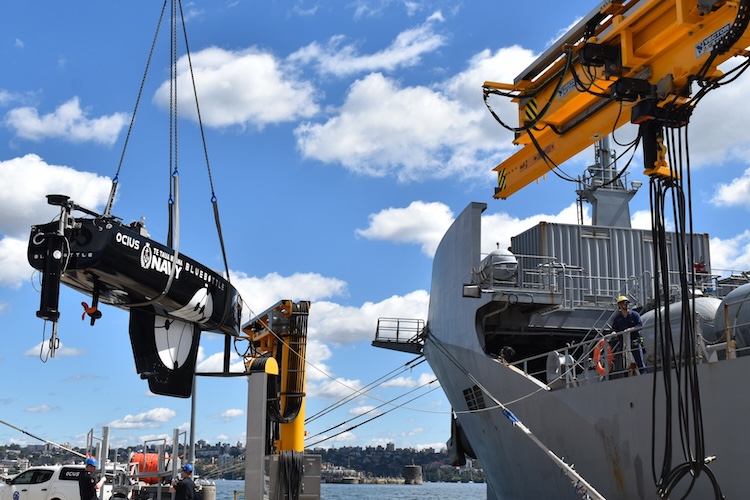
As the nature of warfare transforms, replacing New Zealand’s frigates shouldn’t necessarily equate to acquiring replacement frigates, writes Marc Parsons.
Recent maritime talk once again echoes the similar talk of the 1980s – What frigate shall we buy next? New Zealand needs to work in with our allies fleets and operations. We need to be interoperable with Australia. Yes, we still need anti-submarine capabilities and the ability to support island littoral land forces with fire support.
It’s understandable to look at these defence needs and be forgiven for thinking “we’ll just buy some replacement frigates”.
New Zealand’s ‘two-frigate’ capability has major issues. With the fifth largest maritime Exclusive Economic Zone (EEZ) in the world, New Zealand hasn’t quite been able to conduct surveillance and protection adequately. We’ve had too few assets to cover the vast space, and too few to maintain capability at sea.
Our frigates tied up huge capital and maritime personnel in two ‘exquisite’ platforms, often with one or both tied up alongside for maintenance.
“We talk of buying modern frigates and unmanned systems. We are ignoring the lessons of the past and present – New Zealand can’t afford enough to achieve both platform mass and modern exquisite frigates.“
We treated this problem of insufficient mass with additional Offshore Patrol Vessels and In-shore Patrol Vessels as a stop gap, only to sell some of these as we could not fill the onboard roles. When both frigates were laid up at the same time, we effectively had no operable combat assets for the billions spent.
It’s not 1980 anymore. The decision almost 40 years ago to purchase the two current frigates was based on a benign peacetime collaborative approach where we contributed frigates to defend an allied carrier – playing our part in a 1940s operating model.
Yet, the nature of air, land and sea warfare has irrevocably changed. There’s an arms race in the Pacific, and we risk sabotaging our future Navy by ignoring the current environment. Unmanned systems, for example, have proven their cost-effectiveness, longevity and lethality as applicable to the Southern Ocean as elsewhere across the globe.
Winning on modern battlefields has been shown to require three basic, core attributes: (i) mass, (ii) human-machine teaming and (iii) integrated systems.
Acquiring capabilities with these attributes would require us to spread the capital we had previously put into one exquisite ship into many effective platforms within a system. In short, we must cease buying big ships and focus on acquiring, building and deploying systems of ships, drones, aerial systems, space, and electronic warfare.
It is concerning that we just aren’t doing this. We talk of buying modern frigates and unmanned systems. We are ignoring the lessons of the past and present – New Zealand can’t afford enough to achieve both platform mass and modern exquisite frigates.
If we buy exquisite, we lose mass. In putting all capabilities in two to three ships we are far more likely to lose large chunks or all of our at sea capability in one strike. This has been proven in numerous simulations.
Human-Machine Teaming fleets provide a new approach to provide what we – a small nation – needs. At lower cost we can acquire more multi-role platforms with modular payloads for SAM defence, littoral warfare, or long range surface to surface strike. We can ‘mother-ship’ the unmanned systems, extending reach, surveillance, and lethality exponentially versus a frigate.
Australia has invested heavily in unmanned systems, including Bluebottle USV (like New Zealand), but also including drone submarine Ghost Sharks. Such systems have the same range as frigates, yet are far harder to strike than large surface vessels – they are a real deterrent. New Zealand could run a fleet of these at a fraction of the cost of frigates or manned submarines.
With multi-role ships we can integrate and support a New Zealand and Australian autonomous sub-surface fleet. With such systems we could actually surveil our EEZ, deter an enemy landing on New Zealand shores – and have an effective, capable Navy to be proud of.


