
Right Solution, Right Quantity: A new Defence procurement framework
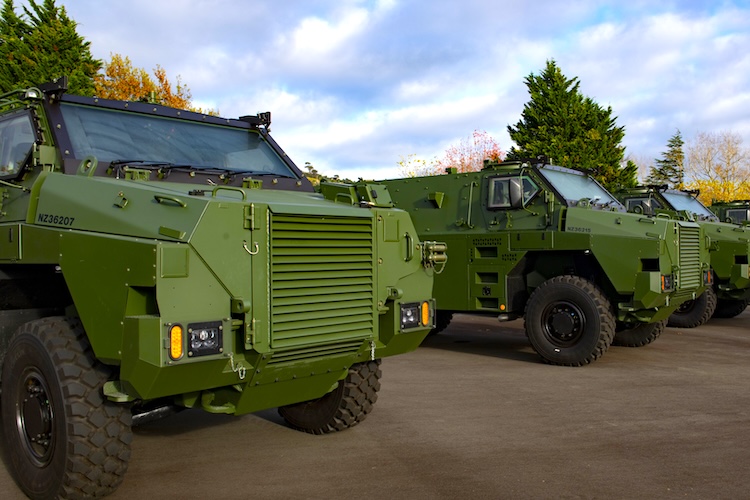
Graeme Doull proposes Defence procurement framework prioritising proven solutions and calculating quantities based on numbers needed for sustained operational capability.
Boots, rifles, frigates, and helicopters – the NZDF has delivered some poor procurement outcomes in the past. New Zealand defence sourcing is slow, costly, and complex, and it tends to fail in two predictable ways: selecting problematic novel solutions or buying too little equipment. New Zealand can ill afford to keep relearning these lessons.
The NZDF’s Defence Capability Plan (DCP25) has already provided some good guidance around avoiding novel solutions and there are also positive signals supporting domestic innovation in the Defence Industry Strategy (DIS) – although how this will be operationalised remains unclear. The biggest gap is making sure force design and resilience are correctly addressed.
Building on these documents a procurement framework is proposed:
- Buy the right solution: prioritise proven, in-service systems recommended by trusted partners. Where innovation is required, leverage domestic capabilities.
- In the right quantity: base acquisitions on a deployable force structure. Multiply by an appropriate resilience factor.
“Real defence innovation requires a fundamentally different model: rapid iteration, close integration between industry and operational units, continual ‘battlefield’ adaptation, and embracing risk. .“
Prioritise proven solutions
New Zealand should leverage its international defence relationships, particularly Australia, when procuring equipment. DCP25 makes this clear: “New Zealand will seek to procure the same assets and equipment as Australia where it makes sense to do so.” Our conventional forces are not fundamentally different from those of Australia or other defence partners, and we should prioritise equipment that is proven by them to work.
Novel solutions create new risks. A historical example is the MARS-L rifle. Defence invested heavily in trials and testing only to select a weapon that was unproven and incompatible with our closest partner. Predictably, issues followed and remediation was required. There is a strong argument that New Zealand should have procured the updated EF88 to align with Australia, or, if that platform was considered unsuitable for some reason, adopted a different proven system such as the HK416.
Plan ANZAC, signed in 2023, commits New Zealand to contributing a motorised infantry battalion group to an ANZAC Brigade. If the NZ Army is serious about interoperability, common equipment is not a ‘nice to have’ – it is essential. Where Australia fields a proven and effective solution at a reasonable price, the default position should be to acquire the ADF system – to the same specification, completely unmodified, fully interchangeable.
However, Australia may pursue capabilities that the NZDF cannot afford, field solutions that are not well suited to New Zealand’s requirements, or they may have had a procurement failure where their solution isn’t one they would recommend. As a specific example, the current ADF armoured vehicle catalogue offers no options suitable for the Pacific theatre – where anything larger than a Toyota Hilux would struggle to operate. If New Zealand determines that a light armoured vehicle is required as part of a Pacific reset then it would need to come from outside of the existing ADF options.
When it is appropriate to look beyond existing ADF options, New Zealand should look to other trusted partners, such as Five Eyes nations, Singapore, Korea, and Japan. The intent should remain consistent: procure equipment that has already been successfully fielded. New Zealand should engage directly with partner nations to understand their experience with a given solution, and whether they would recommend it.
Only once these options are exhausted – or where genuinely new capability is required – such as emerging drone and counter-drone systems – should New Zealand pursue novel solutions. This should remain the exception. The majority of acquisitions should be off-the-shelf, in-service solutions.

This approach does not mean accepting inflated prices or inferior capability. Direct negotiation can offer significant advantages for both NZDF and suppliers. For industry, it reduces cost, risk, and inefficiency; for Defence, it enables interoperability, speed, and – if managed effectively – fair pricing.
Where New Zealand adopts Australian equipment, it should expect comparable pricing under similar terms. Australia invests heavily in competitive tendering, research, development, and innovation; New Zealand should leverage those outcomes through existing bilateral arrangements rather than duplicating effort.
Domestic Technology Acceleration – Innovate at the edge
Emerging technology is an area where the NZDF should be far more ambitious. While New Zealand cannot compete in the production of ships, tanks, or aircraft, it is well placed to develop capabilities in areas such as low-cost drones and counter-drone systems, where success depends on pragmatism, adaptability, and affordability.
Rather than subsidising foreign defence industries, New Zealand should use defence spending to accelerate domestic capability and strengthen collaboration between government, industry, and frontline units.
The Defence Industry Strategy’s proposed Technology Accelerator (funded for $100-200 million) and additional funding ($50 million) for Defence Science and Technology (DST) are positive steps, but there is little evidence yet of a genuinely new approach. Existing procurement frameworks remain heavily process-driven, relying on RFIs and RFPs that tend to deliver like-for-like replacements rather than meaningful innovation. Making a meaningful change will require different ways of working.
Real defence innovation requires a fundamentally different model: rapid iteration, close integration between industry and operational units, continual ‘battlefield’ adaptation, and embracing risk. Battle labs with industry partners working with combat units, with funding based on time and materials, rather than outcomes, will better support experimentation and adaptation.
Achieving this will likely require outsourcing innovation from traditional NZDF Headquarters and Ministry of Defence structures to a genuinely independent technology accelerator with dedicated funding and far greater agility. Its purpose should be getting ‘good enough’ capability into operational hands quickly and improving it continuously.
The global defence sector is already being disrupted by companies such as Anduril Industries, while New Zealand has demonstrated its own ability to produce globally disruptive firms including Rocket Lab, Fisher & Paykel Healthcare, Zuru, and Xero. Applying the same Kiwi strengths – ingenuity, pragmatism, and lean low-cost thinking – to defence technology would strengthen the NZDF, increase New Zealand’s value to defence partners, and create export opportunities that help offset the cost of importing other defence capabilities.
Creating genuine resilience
There are numerous examples of where procurement quantities bear little resemblance to operational requirements: 105 NZLAVs, 60 VAMTAC utility vehicles, 43 Bushmaster vehicles, five Seahawk helicopters and only two frigates. These figures are likely more reflective of budget constraints than coherent military planning, leaving personnel to work with a hodgepodge of different platforms in insufficient numbers.
Insufficient equipment can leave the NZDF without a deployable capability. Since the introduction of the Anzac-class frigates there have been several, often prolonged, periods where both vessels were simultaneously unavailable for operational deployment due to upgrades, heavy maintenance, or crewing constraints.
Determining how much equipment to acquire requires consideration of two factors: the quantity needed to deliver the operational capability, and the level of resilience required to sustain it. These are not complex questions, yet the NZDF continues to get this wrong.
Organisational design should drive equipment numbers. For example, mounting an infantry company in Bushmasters requires 18 vehicles – four per platoon, two for the support section, and four for the company headquarters. In addition, at least two recovery vehicles, two fuel tenders and two logistics vehicles are required – providing essential in-theatre resilience.
Once the deployable design is defined, a resilience factor must be applied. A minimum multiplier of three is required to sustain a capability – one deployed, one training, and one reconstituting. This is the lowest acceptable baseline. More complex or vulnerable capabilities, such as aviation assets, require even higher resilience factors.
This is well established from operational experience, yet seemingly frequently overlooked in New Zealand procurement or force design.
With only two Anzac frigates, New Zealand has not been able to reliably field a frigate. Similarly, five Seahawks realistically allow for only one aircraft to be sustainably deployed. The acquisition of 43 Bushmaster vehicles (25 troop carriers, 10 command variants, four ambulances, two recovery, and two logistics vehicles) is incoherent – insufficient to mount two companies, let alone three, and lacking the support vehicles required to deploy, train, and sustain operations concurrently.

Buying fewer platforms to fit a budget creates orphaned capabilities – fleets that cannot be sustained and platforms that lack resilience. If the required quantity cannot be afforded, the options are to increase funding, reduce per-unit cost, or accept the reality that a sustainable capability is undeliverable.
While reducing cost may involve accepting lower-specification variants or selecting alternative platforms, what should be avoided is the NZDF’s habitual ‘fitted for, but not with’ approach, where full capabilities are deferred. This creates critical training and sustainment gaps, particularly for maintenance personnel.
Adding features only at the point of deployment has a history of creating problems in theatre – for example, armoured vehicle modifications made during the initial East Timor deployment caused significant equipment failures early in the mission. This would have had disastrous consequences if operations had been of a higher tempo.
The cost of insufficient resilience
If a deployment is required, and there is insufficient depth to sustain operations, there are real-world consequences for personnel and organisational resilience.
There is a credible argument that battalion-level deployments to East Timor continued to have effects more than 20 years later. Six deployments exceeded the Army’s ability to deliver two.
These and subsequent commitments – including Afghanistan and managed isolation support – compounded the strain on force resilience. The enduring impact is demonstrated by the only relatively recent return of complex combined-arms exercises above company level. Prior to Timor, they were a regular feature of training.
Sustaining battalion deployments in East Timor required non-infantry personnel to be employed in combat roles, diluting skills across the wider Army and drawing personnel away from their core trades for extended periods. Artillery gunners, for example, spent 18 months performing infantry roles (when pre- and post-deployment activities are included). Despite intensive training and highly engaged teams, employing personnel without the depth of institutional knowledge found in dedicated infantry units resulted in a less capable force and increased risk.
Standardisation enables delivery and innovation
Defence procurement has been inconsistent in the past. The Bushmaster purchase is a case study: the platform is too large for the Pacific theatre; variant numbers are difficult to reconcile with any operational model; and there are insufficient recovery and logistics vehicles to concurrently support deployment and training. Arguably the wrong solution, and definitely the wrong quantity.
A framework that enables proven solutions in sufficient numbers for the majority of acquisitions should create more capacity for innovative approaches. Outsourcing innovation through a defence technology accelerator will fast-track the delivery of drone and counter-drone capabilities, and leverage New Zealand’s strengths.
Freeing up NZDF capacity would allow other types of innovation too. Could New Zealand explore a triangular arrangement in which NZLAVs are transferred to Ukraine in exchange for replacement vehicles better suited to Pacific operations? Such an approach could improve strategic coherence in force design while ensuring that the existing fleet is put to good use.
Rebuilding the NZDF will require significant intellectual and financial investment. There are important decisions on organisational design that need to be made – New Zealand must look to the future, not just replace existing equipment. A framework that prioritises proven solutions, stimulates domestic innovation, and ensures sufficient resilience, will create capacity to focus on those decisions.


